Acne and Internal Health: How Hormones, Diet, Stress and Sleep Can Influence Breakouts
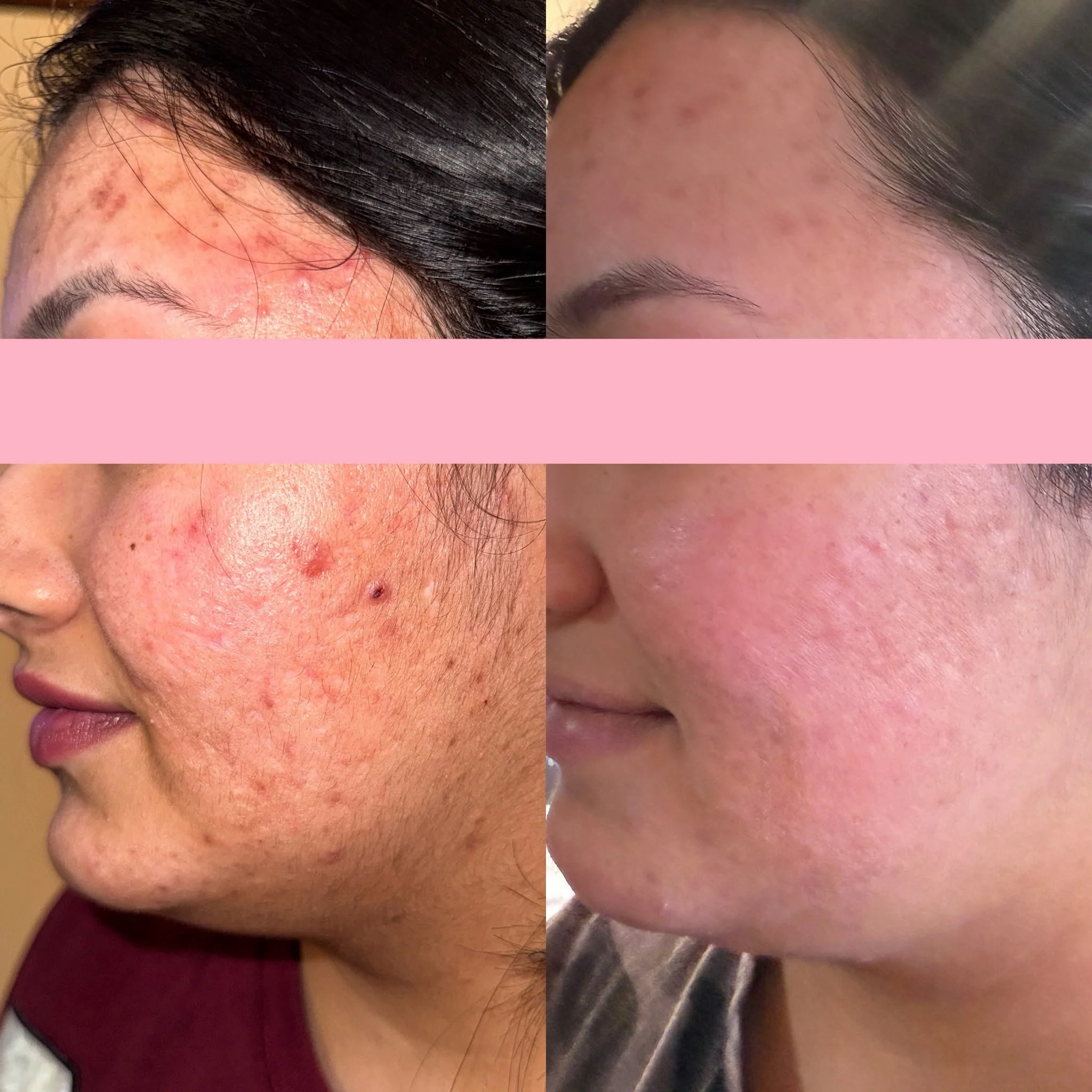
Acne and the pigmentation it leaves behind can be influenced by more than topical skincare alone. Hormones, stress, sleep, dietary patterns and inflammation can all play a role in how breakouts develop and persist.
When acne keeps returning despite a good skincare routine, it is reasonable to wonder whether something else may be contributing.
Sometimes there is.
Acne develops in the skin, but it is influenced by much more than what we put on our face. Hormones, genetics, stress, sleep and certain dietary patterns can all affect the processes involved in breakouts.
That does not mean every case of acne is caused by food, hormones or an internal imbalance.
Acne is multifactorial.
The goal is not to search for one hidden cause. It is to understand the whole picture.
What Actually Causes Acne?
Acne develops within the pilosebaceous unit - the hair follicle, pore and sebaceous gland.
Several things can contribute at the same time:
Increased oil production
Buildup of skin cells within the follicle
Bacterial activity
Inflammation
Hormonal activity
Genetic predisposition
This is one reason two people can have very similar-looking acne but respond differently to the same skincare routine.
The breakout is what we see. What is influencing it can be more complicated.
Hormones and Acne
Hormones, particularly androgens, influence the sebaceous glands and can increase oil production.
This is why acne is common during puberty, but hormonal acne certainly isn't limited to teenagers.
Adult breakouts can fluctuate around the menstrual cycle, pregnancy, perimenopause, menopause and changes in hormonal medications.
Sometimes the pattern itself is useful.
If someone notices that deeper inflammatory breakouts repeatedly appear during the same part of their menstrual cycle, that information matters. It does not diagnose a hormonal condition, but it helps us understand that topical skincare may only be one part of the story.
Does Food Really Affect Acne?
This is an area where myths spread very quickly.
Chocolate causes acne.
Greasy food causes acne.
Dairy causes acne.
The actual research is much more nuanced.
One of the better-supported dietary relationships involves high-glycemic dietary patterns - diets containing a large amount of foods and beverages that cause blood sugar to rise quickly.
These changes can influence insulin and insulin-like growth factor-1, or IGF-1, which are involved in pathways associated with oil production and acne development.
Research suggests that lower-glycemic eating patterns may improve acne in some people.
But this does not mean carbohydrates are the enemy.
Nor does it mean someone with acne should immediately start restricting entire food groups.
The overall pattern of the diet matters more than blaming one individual food.
What About Dairy?
Cow's milk has also been studied in relation to acne.
Some studies have found an association between milk consumption and breakouts, particularly with skim or lower-fat milk. At the same time, the evidence is not consistent enough to say that milk causes acne in everyone.
Yogurt and cheese have not shown the same consistent relationship.
So we would not automatically recommend that every person with acne eliminate dairy.
If someone has repeatedly noticed a connection between a particular food and their breakouts, it is reasonable to pay attention to that pattern rather than assuming everyone needs the same dietary restrictions.
And Whey Protein?
Whey protein deserves a mention because it is increasingly common among people who exercise regularly.
There is emerging evidence suggesting that whey protein supplements may worsen acne in some individuals, although the research is still developing.
That does not make whey protein universally acne-causing.
But if someone's skin suddenly changes after introducing a new protein powder or supplement, it is worth including that detail when looking at their history.
Small changes sometimes provide useful clues.
Stress Can Affect the Skin
Stress does not simply create acne out of nowhere, but it can worsen existing acne.
Stress-related hormonal signalling can influence oil-gland activity and inflammation.
Unfortunately, acne itself can then become stressful.
A breakout appears.
The breakout creates stress.
The acne worsens.
The person becomes even more stressed about their skin.
It can become a frustrating cycle.
This is why persistent acne should not always be looked at purely through the lens of which cleanser or serum someone is using.
Sleep Matters More Than We Used to Think
Research is also exploring the relationship between acne and poor sleep.
Sleep influences hormone regulation, inflammation, immune function and stress. And poor sleep rarely happens in isolation.
Someone consistently sleeping four or five hours a night may also be under significant stress, eating differently and recovering differently.
That does not mean sleeping eight hours will magically clear acne.
It means skin exists within a body, and the systems influencing that body are connected.
What About Gut Health?
The relationship between the gut microbiome and skin - sometimes referred to as the gut-skin axis - is an interesting and developing area of research.
It is also one of the most over-marketed areas of wellness.
We should be careful with statements such as:
“Your acne is coming from your gut.”
We cannot determine someone's gastrointestinal health by looking at their face, and acne is not proof that a person needs a detox, restrictive diet or collection of supplements.
There may be meaningful connections between the microbiome, inflammation and skin.
But the science is much more complex than saying that fixing someone's gut will automatically clear their acne.
What We Often See in Clinic
A common pattern we see is someone continually changing their skincare because the acne keeps returning.
A stronger cleanser.
Another acid.
Another serum.
More exfoliation.
Then another spot treatment.
Eventually, the routine becomes increasingly aggressive while the breakout pattern stays almost exactly the same.
Sometimes the skin needs a better corrective routine.
Sometimes active congestion needs professional treatment.
Sometimes the skin barrier needs to be calmed down.
And sometimes the history tells us that there may be factors outside of skincare worth considering.
The important part is not assuming every case of acne is behaving for the same reason.
Acne and Pigmentation Are Often Connected
For many people, particularly those with melanin-rich skin, the breakout itself is only part of the concern.
Inflammatory acne can leave behind post-inflammatory hyperpigmentation, or PIH, long after the original lesion has healed.
This creates a cycle where someone may simultaneously be dealing with today's breakout and the pigmentation left behind by breakouts from months ago.
If we focus only on fading old marks while new inflammatory lesions continue developing, new pigmentation can continue appearing.
That is why acne control and pigmentation correction often need to work together.
When Acne Deserves a Medical Conversation
A professional skin consultation can tell us a great deal about what is happening in the skin, but it cannot diagnose an internal medical condition.
Sudden or significant adult-onset acne - particularly when it appears alongside changes such as irregular menstrual cycles, increased facial or body hair, or other hormonal symptoms - may warrant assessment by a physician.
Knowing when a concern falls outside the scope of cosmetic skin treatment is an important part of treating skin responsibly.
Looking at the Bigger Picture
Good skincare still matters.
Professional acne treatment still matters.
But neither exists in isolation.
Hormones, genetics, inflammation, dietary patterns, stress, sleep and skincare can all intersect.
The goal is not to blame food for every breakout or endlessly search for something wrong inside the body.
It is simply to recognize that clearer skin sometimes requires looking beyond the surface.
At Glamore Beauty Bar Skin + Laser Clinic in Brampton, our approach to acne considers the complete picture - active breakouts, congestion, inflammation, pigmentation, scarring, home care, treatment history and relevant lifestyle factors.
Because before asking:
“What should I put on my acne?”
it can be useful to ask:
“What might be influencing my acne in the first place?”
Book Your Free Consultation to learn more about an individualized approach to acne and skin health.
Sources & Further Reading
American Academy of Dermatology - Can the right diet get rid of acne?
American Academy of Dermatology - Adult acne: Why it happens and what you can do for it.
Meixiong J, et al. International Journal of Dermatology (2022) - Diet and acne: A systematic review.
European Academy of Dermatology and Venereology (2026) - Diet and acne: Facts and controversies.
Foster PL, et al. Dermatology Practical & Conceptual (2025) - Sleep Disturbances and Acne: A Comprehensive Review.
Written by Georgia
Founder & Advanced Medical Aesthetics Practitioner, Glamore Beauty Bar Skin + Laser Clinic