Melasma vs. Hyperpigmentation: What’s Actually Causing Those Dark Patches?
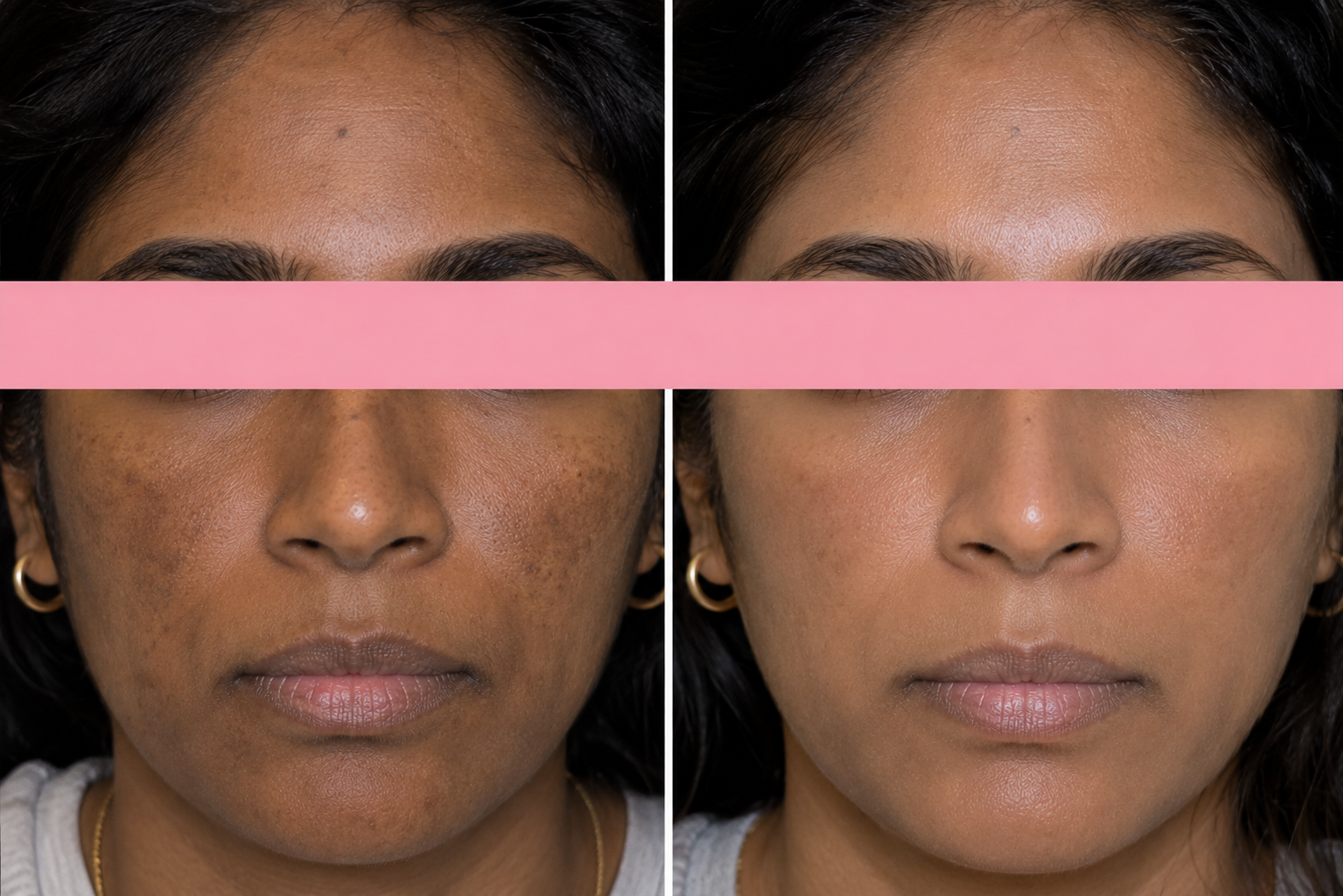
Pigmentation Is More Than a Dark Spot
Melasma and post-inflammatory hyperpigmentation may look similar, but understanding what is causing the pigment is the first step toward treating it safely and effectively.
Although melasma and post-inflammatory hyperpigmentation can both appear as areas of darker pigment, they develop for very different reasons.
Melasma
What it is:
A chronic pigmentary condition involving increased melanin production.
Common appearance:
Often presents as symmetrical brown or grey-brown patches across areas such as the cheeks, forehead and upper lip.
Common triggers:
UV exposure, visible light, hormonal influences, genetics and other biological factors.
Can it return?
Yes. Melasma is often recurrent and may become more noticeable again when its triggers are present.
Treatment approach:
Long-term pigment management, trigger control, appropriate home care and carefully selected professional treatments.
Post-Inflammatory Hyperpigmentation (PIH)
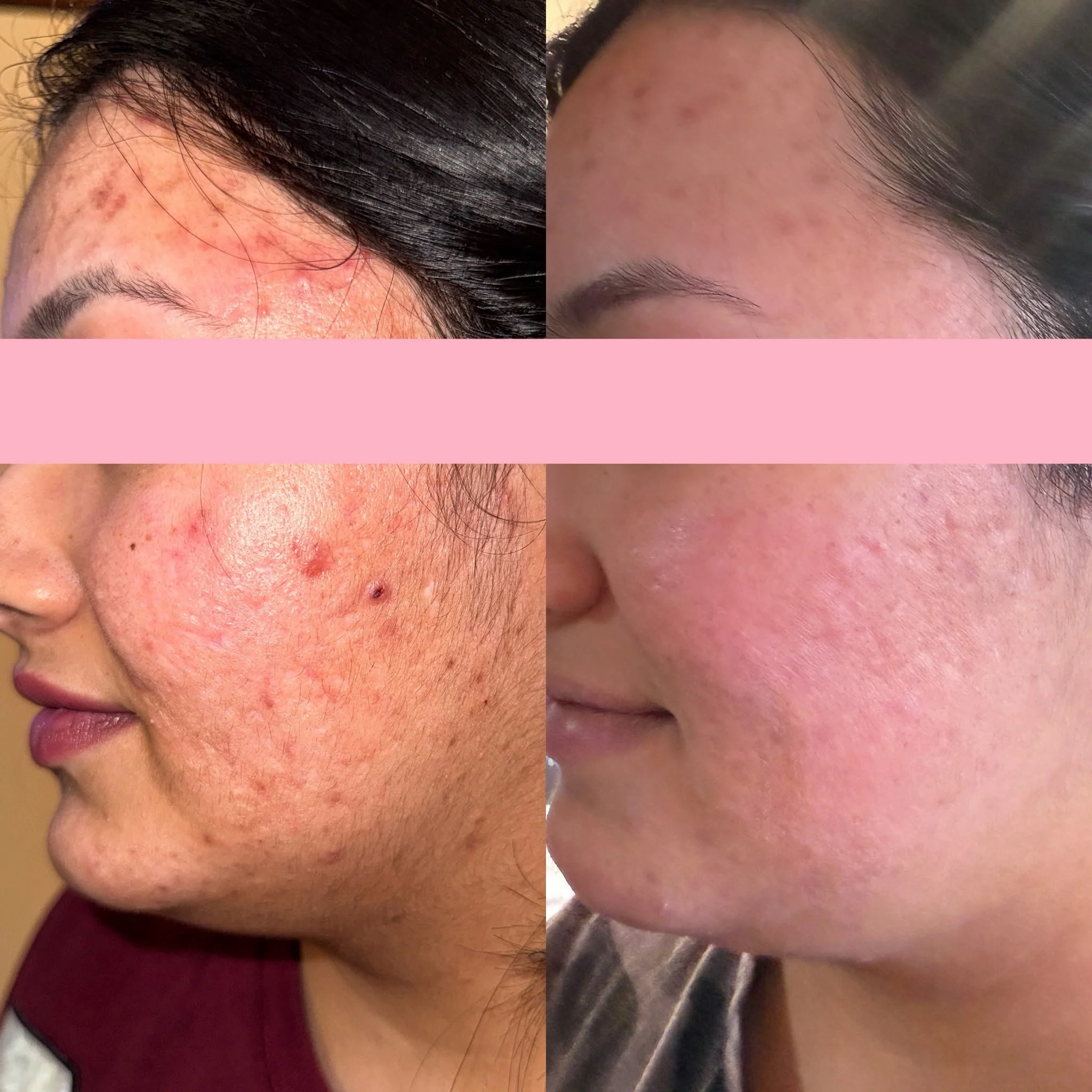
When Inflammation Leaves a Mark
Post-inflammatory hyperpigmentation, or PIH, can remain long after acne or irritation has healed, leaving dark marks that often require time, controlled treatment and careful pigment management.
What it is:
Pigmentation that develops after inflammation or injury to the skin.
Common appearance:
Dark marks typically appear in the same area where the original inflammation occurred.
Common triggers:
Acne, irritation, picking, burns, excessive exfoliation or aggressive skin treatments.
Can it return?
New areas of PIH can continue to develop if inflammation continues.
Treatment approach:
Control the source of inflammation while gradually correcting the residual pigment.
The important distinction: pigmentation should not automatically be treated the same way simply because it looks brown.
What Is Hyperpigmentation?
Hyperpigmentation simply means that an area of skin appears darker than the surrounding skin because of increased pigment.
It can occur for many different reasons, including acne and inflammation, sun exposure, melasma, irritation, injury and certain skin treatments.
So when someone says, “I have hyperpigmentation,” we still haven't identified the underlying concern.
Hyperpigmentation describes what we see.
The cause tells us much more about how we should approach it.
What Is Melasma?
Melasma is a complex pigmentary condition that commonly appears as brown or grey-brown patches, often developing symmetrically across the cheeks, forehead, upper lip and other areas of the face.
It behaves differently from an isolated sun spot.
Melasma can be influenced by UV exposure, visible light, hormonal factors, genetics, certain medications and underlying melanocyte activity.
This complexity helps explain why melasma may improve beautifully and later become visible again.
Treating melasma is therefore not simply about trying to eliminate existing pigment.
The larger goal is managing the factors encouraging the skin to continue producing that pigment.
That requires a very different mindset from simply trying to make a brown spot disappear as quickly as possible.
What Is Post-Inflammatory Hyperpigmentation?
Post-inflammatory hyperpigmentation - usually called PIH - develops following inflammation or injury to the skin.
A classic example is acne.
The breakout disappears, but a brown, grey or darker mark remains behind.
PIH can also develop following skin irritation, picking or squeezing, burns, excessive exfoliation, inflammatory skin conditions and certain cosmetic treatments.
For some people, an acne lesion may last several days while the pigmentation it leaves behind remains visible for several months.
This is why treating active acne and treating the marks left by previous acne are often two related but separate goals.
Why Pigmentation Can Be More Complicated in Melanin-Rich Skin
All skin contains melanocytes - the cells responsible for producing melanin.
Melanin itself is not a problem. It performs important protective functions within the skin.
However, melanin-rich skin can be particularly susceptible to persistent pigmentation following inflammation.
This becomes especially important when treatments intentionally create controlled inflammation or injury within the skin.
The objective should not simply be to create the strongest possible reaction.
The objective is to create an appropriate biological response without unnecessarily stimulating additional pigmentation.
That principle is particularly important when treating Fitzpatrick IV, V and VI skin and influences how we approach pigmentation correction at Glamore Beauty Bar Skin + Laser Clinic in Brampton.
What We Often See During Pigmentation Consultations
One pattern we frequently see is someone trying to correct pigmentation while the process creating that pigmentation is still happening.
Acne-related PIH is a good example.
If new inflammatory breakouts are continually developing while we aggressively target the marks left by previous breakouts, we can end up chasing pigmentation rather than controlling what is producing it.
We also see skin that has been subjected to numerous acids, scrubs, retinoids, peels and brightening products because the client understandably wants the pigmentation gone quickly.
But when the skin is already irritated, adding more irritation is not necessarily the answer.
Sometimes successful pigment correction starts by getting the skin calmer and healthier first.
Before Treating Pigmentation, We Want to Know Why It Is There
Choosing a machine or treatment should not be the first step.
The history matters.
Did the pigmentation develop after acne?
Did it appear following a peel or another treatment?
Is it symmetrical?
Does it become more noticeable during the summer?
Is there active inflammation underneath it?
Has the skin recently been over-exfoliated or irritated?
What has already been tried?
What products are being used at home?
Those answers can significantly change the treatment strategy.
There is also an important safety distinction: not every pigmented lesion is a cosmetic pigmentation concern. A new, changing or unusual pigmented lesion should be medically assessed before cosmetic treatment.
Is the Pigment on the Surface or Deeper in the Skin?
Pigment does not always exist at the same depth.
Some pigmentation is predominantly epidermal, meaning it is situated closer to the surface of the skin.
Other pigmentation can have a dermal component, meaning pigment is present deeper within the skin.
Some pigmentary conditions can involve both.
This is one reason two people with visually similar dark patches may respond completely differently to the same treatment.
Depth matters. Cause matters. Skin type matters. Treatment history matters.
There is no single laser setting, peel strength or skincare ingredient that should automatically be used on everyone with pigmentation.
Where Does Q-Switched Nd Laser Fit In?
Q-switched Nd technology provides another option for certain pigmentary concerns.
The 1064 nm wavelength penetrates relatively deeply into the skin while having lower absorption by epidermal melanin than shorter wavelengths, which is one reason it has been extensively studied in pigment treatment.
Low-fluence 1064 nm Q-switched Nd treatment may be incorporated into some pigmentation and melasma treatment plans when appropriate.
But there is an extremely important distinction:
More laser energy does not automatically mean better pigment correction.
Research on laser toning for melasma also demonstrates why treatment needs to be controlled. Excessive cumulative laser exposure can contribute to complications including unwanted hyperpigmentation or mottled hypopigmentation.
Melasma in particular requires restraint.
For an appropriately selected client, Nd can be a valuable tool.
But the laser is only one part of the overall strategy.
Where Does Microneedling Fit In?
Microneedling approaches the skin differently.
Rather than targeting pigment with laser energy, controlled microneedling creates microscopic channels within the skin and initiates a wound-healing response.
It can be particularly useful when pigmentation exists alongside concerns such as acne scarring, uneven texture, enlarged pores or overall skin-quality concerns.
This is why treatment planning is more nuanced than simply choosing between “laser or microneedling.”
Sometimes one modality is appropriate.
Sometimes another is.
And sometimes different technologies can play different roles at different stages of a treatment plan.
One of the Biggest Pigmentation Mistakes We See
People understandably want pigmentation gone quickly.
So they attack it.
An exfoliating cleanser, a scrub, glycolic acid, retinol, brightening serums and peel pads can quickly turn into a very complicated routine.
Then the pigmentation is still visible, so another active product gets added.
Eventually, the skin barrier becomes irritated.
And irritated, pigment-prone skin does not necessarily become clearer simply because we exfoliate it again.
In fact, ongoing irritation can contribute to unwanted pigmentation.
This is why barrier health is part of pigment correction.
Corrective ingredients can absolutely be useful, but they need to be introduced strategically.
More active ingredients do not automatically mean faster results.
Sunscreen Is Part of Pigmentation Treatment
Sun protection is not simply aftercare.
For someone actively trying to correct pigmentation, it is part of the treatment itself.
UV exposure can stimulate pigment production, and visible light can also contribute to melasma and hyperpigmentation, particularly in deeper skin tones.
For this reason, consistent broad-spectrum SPF 30 or higher is important.
For clients dealing with melasma or pigmentation-prone skin, tinted sunscreen containing iron oxides may provide additional protection against visible light.
Correcting pigment while repeatedly stimulating melanocytes through unprotected light exposure makes long-term control considerably more difficult.
So What Is the Best Treatment for Pigmentation?
There isn't one universal answer.
And that is probably the most important thing to understand.
The better question is:
“What type of pigmentation am I dealing with, what is contributing to it, and what is the safest way to improve it in my skin?”
Depending on the individual, a treatment plan may involve Q-switched Nd laser, microneedling, professional skin treatments, targeted corrective skincare, barrier-supportive home care and consistent sun and visible-light protection.
But treatments should not simply be stacked together because they are available.
Each treatment should have a reason for being there.
Pigmentation Treatment Should Be Strategic, Not Aggressive
When treating pigmentation - particularly in melanin-rich or PIH-prone skin - the strongest treatment is not necessarily the smartest treatment.
Successful pigment correction often comes from understanding the skin well enough to know what to treat, when to treat it and when not to push it.
At Glamore Beauty Bar Skin + Laser Clinic in Brampton, pigmentation treatment plans are individualized according to the appearance of the pigmentation, skin tone, treatment history, current skin condition and overall treatment goals.
If you are dealing with melasma, persistent acne marks, uneven pigmentation or dark patches that never seem to fully disappear, the first step is understanding what may be driving them.
Book Your Free Consultation to begin building the right treatment strategy for your skin.
Sources & Further Reading
American Academy of Dermatology - Melasma self-care and visible-light protection guidance.
Chen J, et al. Journal of Cosmetic Dermatology (2022) - Efficacy of low-fluence 1064 nm Q-switched Nd laser for the treatment of melasma: A meta-analysis and systematic review.
Lee YS, et al. Medicina (2022) - The Low-Fluence Q-Switched Nd Laser Treatment for Melasma: A Systematic Review.
Written by Georgia
Founder, Glamore Beauty Bar Skin + Laser Clinic
Georgia has more than eight years of experience in advanced medical aesthetics, with a particular focus on corrective skin treatments, pigmentation, acne scarring, microneedling and laser-based skin rejuvenation.