By Georgia Zarogiannis, Medical Aesthetician at Glamore Beauty Bar Skin + Laser Clinic, Brampton
You did everything right. You (mostly) left the pimple alone, it finally went away, and now there's a mark sitting in its place that seems to be sticking around even longer than the breakout did. If you're tired of reaching for concealer every morning, I get it. I see this in my treatment room every single week, and it's one of the most frustrating things my clients deal with.
So here's what I want you to know first: that mark is not permanent, and you're not stuck with it. You just need to know what kind of mark it is.
The short answer: A red or pink mark is usually PIE (post-inflammatory erythema), which comes from irritated blood vessels. A brown or dark mark is usually PIH (post-inflammatory hyperpigmentation), which comes from extra pigment. Press on it. If it turns white for a second, it's PIE. If the colour doesn't budge, it's PIH.
Why is my acne mark still there when the pimple is gone?
Think of every pimple as a tiny wound. When it heals, your skin can react in one of two ways. It can leave the little blood vessels underneath irritated, which shows up as red. Or it can go into protection mode and send out extra pigment, which shows up as brown. Lots of people get both, sometimes on the same cheek.
Neither one means you did something wrong. It's just how your skin heals.
What is PIE?
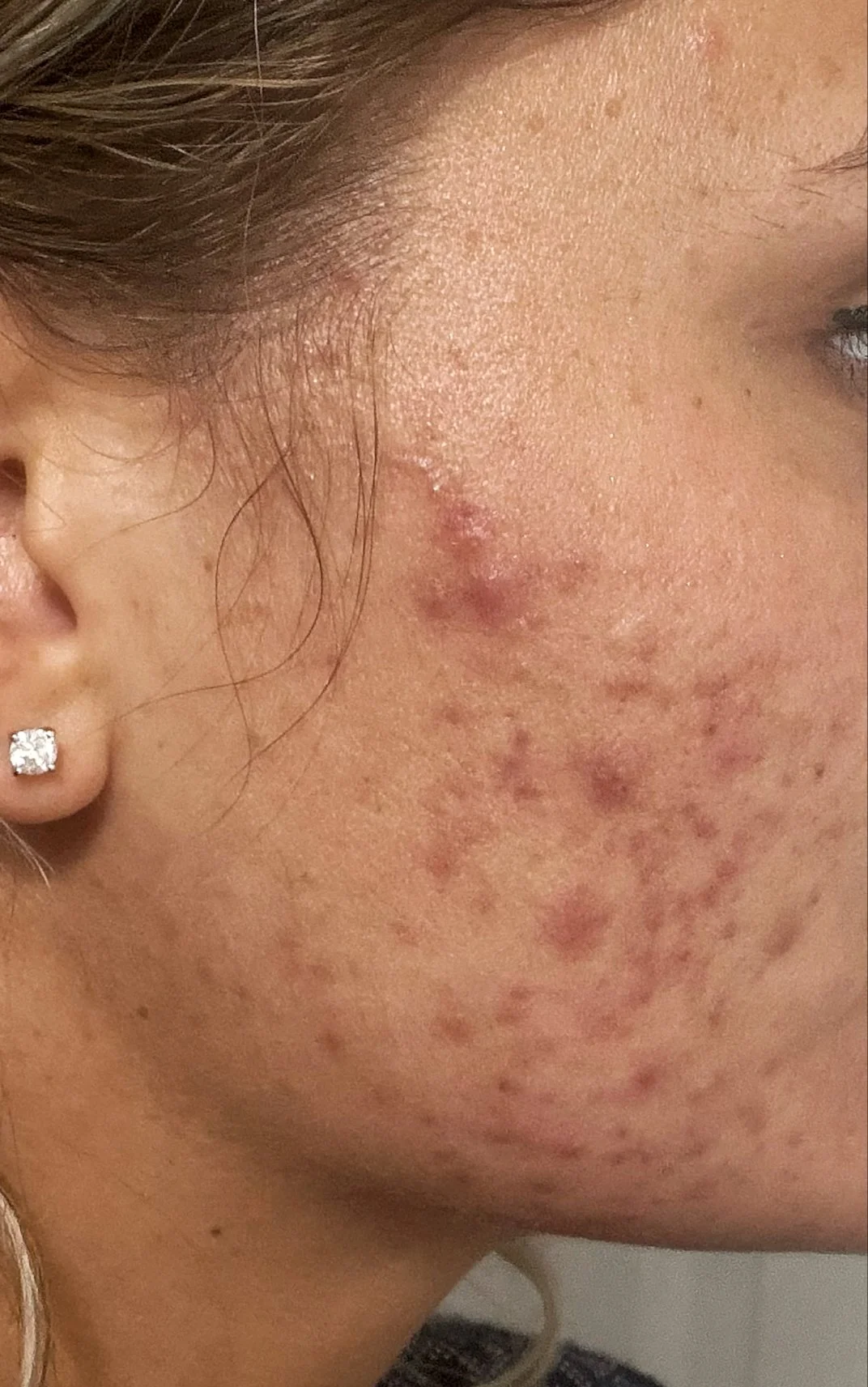
PIE is that red, pink or purplish spot that just won't calm down. It isn't pigment at all, which is why so many people spend a fortune on brightening serums and see nothing change. You can't brighten away a blood vessel issue.
I see PIE most often on lighter skin, and almost always after deep, painful breakouts or (be honest with yourself here) a little bit of picking.
What is PIH?
PIH is the flat brown, grey or dark purple spot left behind after a breakout heals. Your skin made more melanin than it needed while it was repairing itself, and now that extra colour is just sitting there.
If you have medium or deeper skin, PIH is probably your biggest frustration, and I hear you. Your pigment cells are more reactive, so even a small pimple, an ingrown hair or a treatment that was too harsh can leave a mark that lasts for months. That's exactly why the products and treatments you choose matter so much.
How do I know if my acne mark is PIE or PIH?
Try this tonight in the mirror. Press a clear glass or your fingertip on the mark and watch what happens.
It's probably PIE if:
It's red, pink or purplish
It turns white when you press it, then goes back to red
You have lighter skin
It's probably PIH if:
It's brown, grey, dark purple or black
The colour stays exactly the same when you press it
You have medium to deeper skin
Seeing a bit of both? That's really common, especially along the cheeks and jawline. It just means we treat both at the same time.
Is it an acne mark or an acne scar?
This is one of the first things I check in a consultation, because people mix them up all the time.
Close your eyes and run your fingers over the spot. If it feels smooth, it's a mark, and marks can fade. If you can feel a dip, a pit or a bump, that's a scar, and scars need a different plan. If that sounds like you, have a look at our acne scar treatment in Brampton.
How do I get rid of red acne marks (PIE)?
With PIE, your skin is basically still upset. The goal is to calm it down and give it a chance to heal.
Hands off. I know it's hard. But every time you pick or squeeze, you restart the whole cycle and the mark stays longer.
Be gentle with your skin barrier. A soft cleanser and a good moisturizer go a long way. This is not the time to pile on five strong products at once.
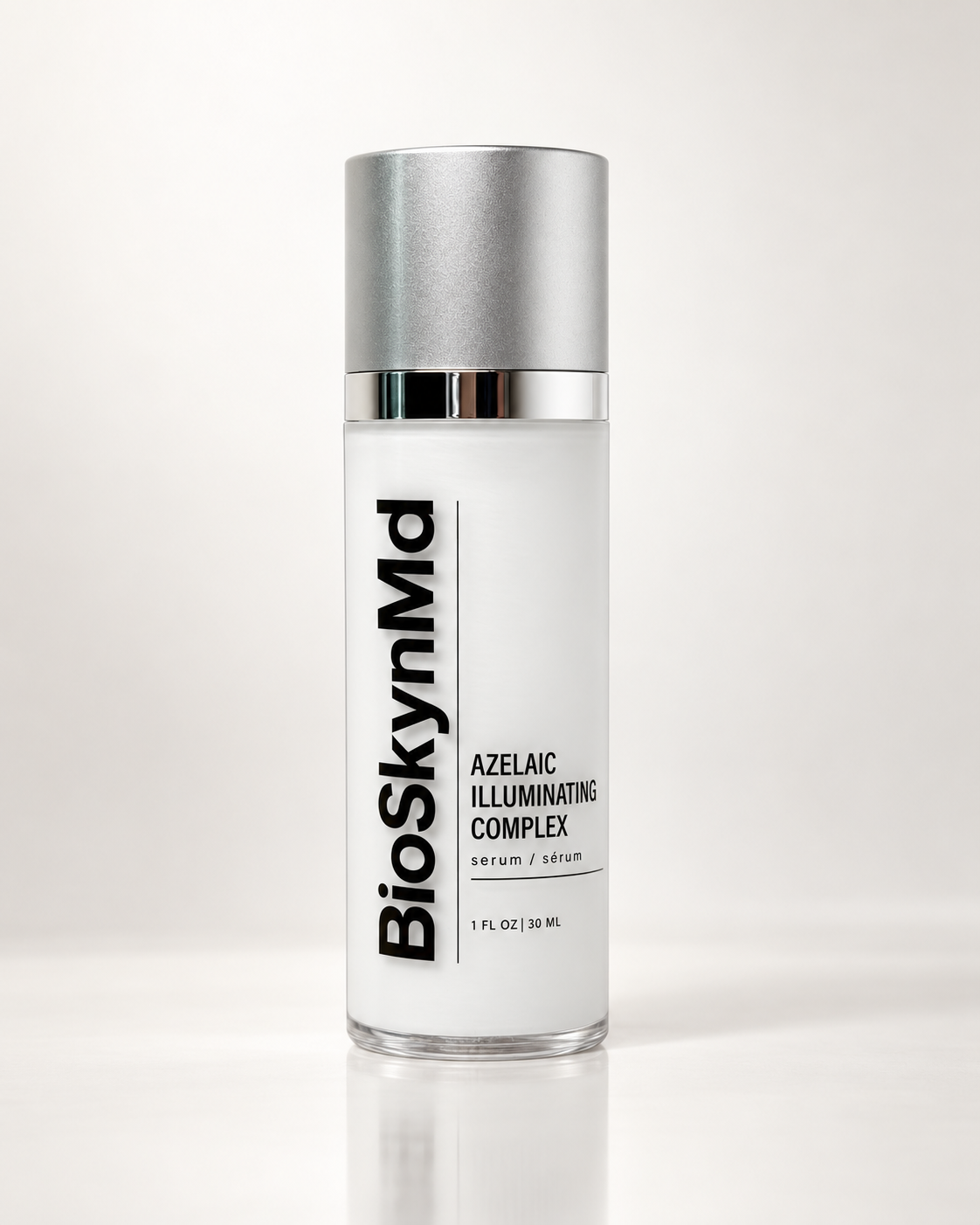
Use calming ingredients. Azelaic acid and niacinamide are two of my go-tos for redness. Centella, green tea and aloe help soothe too.
Try microneedling. In the clinic, microneedling helps your skin repair itself and can make stubborn redness fade faster.
Give it time. PIE often fades on its own over a few months. The right routine just helps it get there sooner.
How do I get rid of dark acne marks (PIH)?
With PIH, we're working on pigment. The goal is to slow down how much melanin your skin is making and help it shed the darker cells.
Vitamin C in the morning. It brightens and helps stop new pigment from forming.
Exfoliating acids, slowly. Glycolic, lactic and mandelic acid clear away the darker surface cells. But please go slow. Over-exfoliating can create even more PIH, especially on deeper skin.
Pigment fighters. Niacinamide, azelaic acid, tranexamic acid and retinoids all help fade dark spots over time.
Chemical peels. A peel chosen for your skin type can speed things up a lot. Here's more on our chemical peels.
Laser toning. Our pigment laser targets melanin and breaks it up gradually. I adjust it to your skin tone, which is what makes it a good option for lighter and deeper skin alike. Learn more about our laser treatments.
Microneedling. It boosts cell turnover and helps your skincare work better.
One more thing: if your dark patches are spread across your cheeks or forehead instead of sitting where pimples used to be, it may be melasma rather than PIH. That's a different condition, and I talk about it on our melasma treatment page.
When should I see a professional?
You don't have to figure this out alone. It might be time to come in if:
You've been consistent for a few months and nothing is changing
You're not sure if it's PIE, PIH, scarring or melasma
You have deeper skin and you're nervous about making the pigment worse
You're still breaking out and want to stop new marks before they start
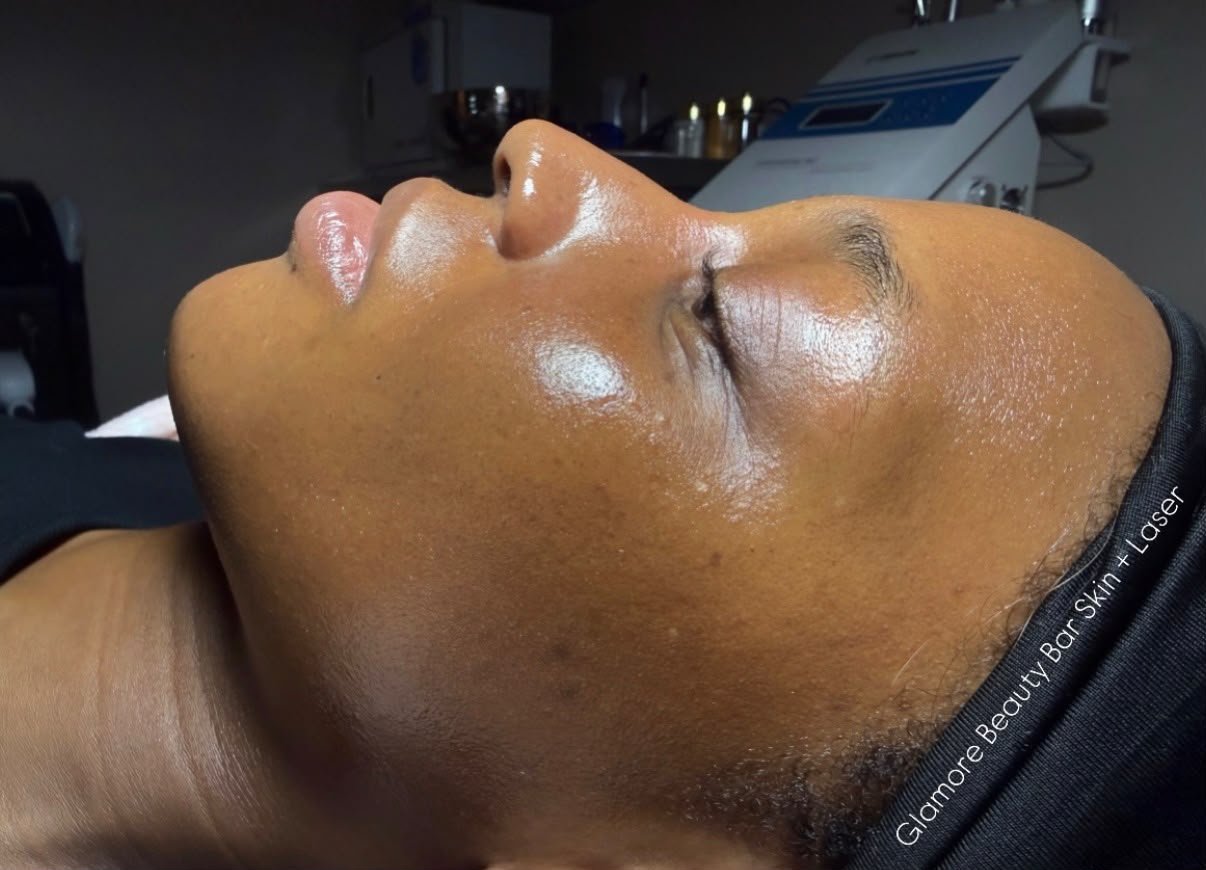
When you come see me at Glamore, we start with a proper skin assessment. I'll look at your marks, your skin tone and your current routine, and we'll build a plan that fits you. That might be a custom facial, a peel, microneedling, laser, or a mix.
What's the one thing that helps both?
Sunscreen. Every day. Yes, even in January.
I tell every single client this. You can use the best serums and get the best treatments, but if you skip SPF, the sun undoes all that work. UV keeps red marks red longer and makes dark marks darker. Use a broad-spectrum SPF 30 or higher and reapply when you're outside.
Two habits that also make a huge difference:
Keep your hands off your face.
Get your active breakouts under control. Fewer pimples means fewer new marks to fade.
How long will my acne marks take to fade?
I wish I could give you one number, but every skin is different. It depends on how deep the breakout was, your skin tone, and how consistent you are with your routine and sunscreen.
PIE can fade in a few months on its own, but it lingers longer if you keep irritating it. PIH can take anywhere from a few months to a year or more, especially when the pigment sits deeper. The right professional treatments can shorten that a lot.
Frequently asked questions
What does PIE stand for in skincare?
Post-inflammatory erythema. It's the red or pink mark left after a pimple, caused by irritated blood vessels.
What does PIH stand for in skincare?
Post-inflammatory hyperpigmentation. It's the brown or dark spot left when your skin makes extra pigment while it heals.
Is PIE or PIH harder to get rid of?
It depends. PIE often fades on its own with gentle care, while PIH can take longer, especially in deeper skin tones. Both respond well to the right treatments.
Can you have PIE and PIH at the same time?
Yes, it's very common, sometimes even in the same spot. Your treatment plan should target both.
Does vitamin C help with red acne marks?
It's great for dark spots, but it's not the main fix for redness. Azelaic acid and niacinamide usually do more for red marks.
Are PIE and PIH permanent?
No. Neither one is a true scar, and both can fade. If you can feel a dip or bump in the skin, that's scarring.
Where can I get acne mark treatment in Brampton?
Glamore Beauty Bar, 57 Mill St N, Unit 106, Brampton. We treat red and dark acne marks with chemical peels, microneedling, laser and custom facials.
Ready to stop covering up your acne marks?
You've lived with these marks long enough. Book a consultation with me at Glamore Beauty Bar in Brampton, and I'll tell you exactly what's going on with your skin and the fastest, safest way to clear it.
Glamore Beauty Bar 57 Mill St N, Unit 106, Brampton, ON L6X 1S9 (647) 983-6269